Quick Answer: HLTAID012 is the current unit of competency for providing first aid in an education and care setting. ACECQA lists it nationally under First Aid, Asthma and Anaphylaxis, while the training unit covers first aid responses to infants, children and adults, including asthma and anaphylactic emergencies.
Children can move from a normal day to an emergency very quickly.
An educator may need to respond to choking, injury, an asthma episode, an allergic reaction, a seizure or another unexpected event while also keeping other children safe.
That is why first aid training in education and care needs to reflect the environment in which educators actually work.
What Is HLTAID012?
HLTAID012 is the unit titled Provide First Aid in an education and care setting.
The national training register states that it covers first aid responses to infants, children and adults and includes asthma and anaphylactic emergencies. It applies to a range of workers in education and care settings, including early childhood workers and educators working with school-age children in outside-school-hours care and vacation programs.
ACECQA lists HLTAID012 nationally under First Aid, Asthma and Anaphylaxis.
Why Education and Care First Aid Is Different
An emergency involving a young child requires an approach appropriate to the child’s age, development and circumstances.
Training may address situations involving:
- Choking.
- Falls.
- Cuts and bleeding.
- Burns.
- Unconsciousness.
- Breathing difficulties.
- Asthma.
- Anaphylaxis.
- Febrile convulsions.
- Other childhood emergencies.
The objective is not to diagnose a medical condition. The first aider’s role is to recognise an emergency, provide an appropriate first aid response within their training, follow established procedures and obtain medical assistance when required.
Choking Emergencies
Choking is a key concern in settings where young children eat, play and explore their environment.
Educators need to know how to recognise an airway emergency and respond according to current first aid training.
Practical training matters because choking response techniques differ according to the situation and age of the casualty.
A training environment gives educators the opportunity to practise rather than relying on written instructions during a real incident.
Febrile Convulsions
Febrile convulsions can be frightening for educators and other staff.
First aid training focuses on keeping the child safe, observing the event, following the service’s procedures and seeking appropriate medical assistance.
Educators should not attempt to diagnose the cause of a convulsion.
Where a child has a documented medical management plan, staff should understand how that plan fits into the service’s emergency procedures.
Asthma in Education and Care
Asthma management requires more than knowing where an inhaler is stored.
Staff need to understand the service’s procedures and any relevant individual asthma management plan.
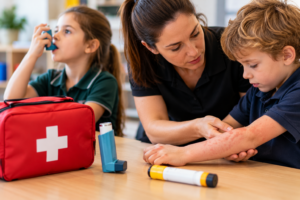
A training program can help educators recognise signs of an asthma emergency and respond according to established first aid procedures.
The national HLTAID012 unit specifically includes asthma and anaphylactic emergencies within its scope.
Anaphylaxis and Emergency Medication
Anaphylaxis can become life-threatening and requires an urgent response.
Educators should understand:
- Signs that may indicate anaphylaxis.
- The child’s individual action plan where applicable.
- The location of emergency medication.
- Emergency service procedures.
- How to follow trained medication administration procedures.
- What information should be communicated to emergency services.
- Incident reporting requirements.
Training should complement, not replace, medical management plans.
What Does ACECQA Say About HLTAID012?
ACECQA’s approved qualification information lists HLTAID012 as a nationally approved qualification under the First Aid, Asthma and Anaphylaxis category.
This is particularly relevant to education and care services reviewing staff qualifications.
However, service operators should still check their current regulatory obligations, staffing arrangements and any jurisdiction-specific requirements rather than assuming that holding one qualification alone completes every compliance responsibility.
Choosing the Right Training
When selecting a Childcare First Aid Course Melbourne, service operators should confirm:
- Current unit code.
- National training product status.
- Whether the qualification meets the service’s applicable requirements.
- Practical assessment.
- Trainer and assessor arrangements.
- Course delivery format.
- Completion documentation.
- Refresher or currency requirements.
Training.gov.au currently lists HLTAID012 as current.
Staff Coverage Matters
A centre should not simply ask, “How many staff have first aid certificates?”
It should also consider:
- Opening hours.
- Staff rosters.
- Breaks.
- Leave.
- Staff turnover.
- Excursions.
- Outdoor activities.
- School-age care.
- Emergency access.
A qualification is useful only when trained staff are available to respond.
Education and Care First Aid Checklist
| Area | What to review |
|---|---|
| First aid training | Appropriate current qualification |
| Asthma | Relevant procedures and plans |
| Anaphylaxis | Emergency procedures and medication |
| Medication | Accessible and appropriately managed |
| Action plans | Current and available |
| Staff coverage | Appropriate trained staff |
| First aid kit | Stocked and maintained |
| Emergency contacts | Current |
| Incident records | Properly maintained |
| Review | Procedures reviewed regularly |
Common Compliance Pitfalls
Assuming HLTAID012 replaces service procedures
The qualification is one part of the overall system.
Failing to check staff coverage
Training must be available across the service’s operating arrangements.
Ignoring individual action plans
Children with known medical conditions may have specific plans that staff need to understand.
Using outdated course information
Training products and regulatory requirements can change, so service operators should check current information before booking.
Frequently Asked Questions
Is HLTAID012 approved for education and care settings?
It is listed by ACECQA nationally under First Aid, Asthma and Anaphylaxis.
Does HLTAID012 cover asthma?
The unit applies to first aid emergencies including asthma and anaphylactic emergencies.
Does it cover children?
Yes. The unit specifically covers first aid responses to infants, children and adults.
Does the qualification replace an individual medical action plan?
No. Staff training and individual medical management plans serve different purposes and should work together.
Train Your Education and Care Team
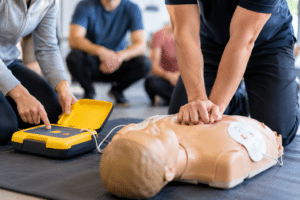
Practical training gives educators the opportunity to rehearse emergency responses before they are needed.