Quick Answer: HLTAID009 is the current unit for providing CPR and requires practical demonstration of CPR and AED skills in line with Australian Resuscitation Council guidance. Regular CPR skill refreshers are strongly relevant for people who may need to respond in an emergency, although specific refresher requirements depend on the workplace, role and regulator.
CPR is a skill that depends on practical performance.
A person may remember the basic sequence but still benefit from regular hands-on practice with a manikin and training AED.
For workplaces, the question is not simply whether an employee completed CPR training several months or years ago. Employers should consider whether the person’s skills remain current for the role and whether any applicable workplace or regulatory requirements have been met.
What Is HLTAID009?
HLTAID009 is the current unit of competency for providing cardiopulmonary resuscitation.
The national training register states that the unit covers the skills and knowledge required to perform CPR in line with ARC guidelines and applies to people who may be required to provide CPR in community and workplace settings.
The unit requires practical assessment rather than theory alone.
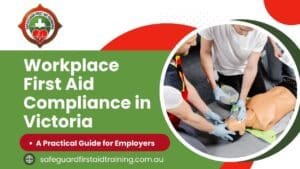
Candidates need to demonstrate CPR and AED skills using appropriate training equipment.
Why Regular CPR Practice Matters
The Australian Resuscitation Council recognises the importance of maintaining CPR skills and recommends regular skill refreshers. ARC guidance has stated that people trained in CPR should refresh their skills at least annually, while distinguishing skill refreshers from annual formal assessment.
That is different from saying that Australian law universally requires every person to complete a formal CPR course every 12 months.
The current HLTAID009 unit specifically states that regulatory requirements relating to refresher training should be obtained from the relevant WHS authority.
Employers should therefore check their own policies and applicable requirements.
The 30:2 CPR Ratio
For standard CPR, the familiar compression-to-ventilation ratio is 30:2.
ARC guidance has maintained the 30:2 ratio in its basic life support guidance. (Australian Resuscitation Council)
The important point during training is not simply remembering the number. Participants need to practise:
- Correct positioning.
- Effective compressions.
- Appropriate rate.
- Appropriate depth.
- Minimising interruptions.
- Rescue breaths where appropriate and where the rescuer is willing and able.
- AED integration.
The current national unit requires practical CPR demonstrations on adult and infant manikins.
AED Training: What Participants Should Practise
An AED is designed to guide a rescuer through the defibrillation process.
In a training environment, participants should practise the sequence rather than simply watch a demonstration.
Typical training activities include:
- Recognising the emergency.
- Calling for emergency assistance.
- Starting CPR as appropriate.
- Activating the AED.
- Applying training pads.
- Following the device prompts.
- Keeping everyone clear during analysis and shock delivery.
- Resuming CPR when directed.
HLTAID009 specifically includes AED operation according to manufacturer instructions within its performance requirements.
WorkSafe Victoria also provides guidance on AEDs as part of workplace first aid arrangements.
What Happens During Practical Assessment?
A CPR Course Melbourne participants choose should include meaningful practical training and assessment where a nationally recognised unit is being delivered.
HLTAID009 assessment requires realistic scenarios and simulations.
Training.gov.au identifies requirements including adult and infant resuscitation manikins, AED training equipment and PPE. Candidates must demonstrate the required skills in simulated emergency scenarios.
Practical preparation
Before attending:
- Wear comfortable clothing.
- Be prepared to work at floor level.
- Participate fully in scenarios.
- Ask questions when unsure.
- Practise rather than simply observe.
- Follow trainer instructions.
- Become familiar with AED prompts.
Adult and Infant CPR
HLTAID009 is not limited to adult CPR.
The competency includes practical requirements involving adult and infant scenarios.
That matters for workplaces where staff may encounter members of the public, children or families.
The response should always be based on the current training guidance and the circumstances of the emergency.
What Should a CPR Refresher Cover?
Effective refresher training should focus on skill retention.
A useful session should provide opportunities to practise:
- Emergency assessment.
- CPR.
- AED use.
- Adult scenarios.
- Infant scenarios.
- Communication.
- Infection-control precautions.
People who rarely use CPR skills may find that practical repetition is more useful than simply rereading course notes.
Choosing CPR Training for Your Team
When comparing CPR Training Melbourne providers, businesses should look beyond the headline price.
Check:
- Current unit code.
- RTO details.
- Practical assessment.
- Training equipment.
- Adult and infant manikins.
- AED practice.
- Trainer and assessor arrangements.
- Completion documentation.
- Refresher expectations.
A reputable training provider should be able to explain exactly what participants will learn, practise and demonstrate.
Common CPR Training Mistakes
Treating CPR as a theory subject
CPR needs physical practice.
Ignoring AED training
Participants should have the opportunity to practise with a training AED.
Forgetting infant scenarios
HLTAID009 includes infant CPR requirements. (training.gov.au)
Assuming annual training is always a legal requirement
The requirement depends on the relevant role, workplace and regulator. ARC supports regular skill refreshers, while the national unit directs users to the relevant WHS authority for specific regulatory requirements.
Frequently Asked Questions
Is 30:2 still used in CPR training?
Yes. ARC guidance continues to identify 30:2 as the standard compression-to-ventilation ratio for basic life support. (Australian Resuscitation Council)
Does HLTAID009 include AED training?
Yes. AED operation forms part of the unit requirements.
Does HLTAID009 include infant CPR?
Yes. Practical requirements include infant CPR scenarios.
Is annual CPR certification legally required for everyone?
No universal rule applies to every person. Employers and workers should check the requirements relevant to their workplace, role and regulator.
Keep Your CPR Skills Current
If your team needs practical CPR training or a refresher session, Safeguard First Aid Training provides training for workplace and community settings.
Review the HLTAID009 course and practical training requirements